The Joy of Imperfection
As part of our series on Korora's positioning on AI and creativity, we have asked choir members and families to share their perspectives. In addition to many years singing with Òran, Jordan Haynie Ware serves as the Archdeacon for Justice for the Anglican Diocese of Edmonton and as the rector of Good Shepherd, Edmonton. She is an author, priest, podcaster, and a proud immigrant to Canada.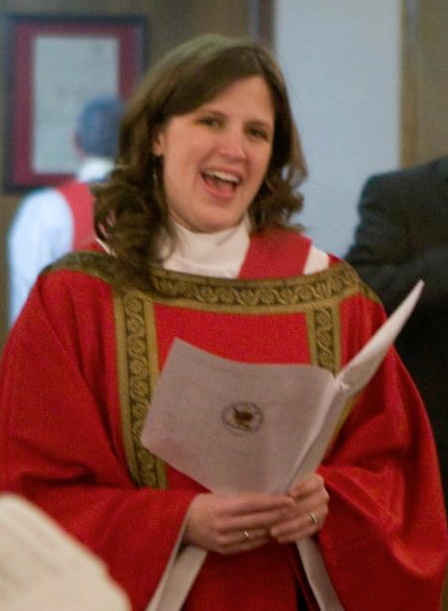
When I was a little girl, my family always sang our holiday table grace.
My grandfather was the trumpet professor at the University of North Texas, and my great-grandfather had been the director of bands at the University of Illinois, so we were a musical family, but singing wasn’t most people’s instrument. Picture the scene from You’ve Got Mail where they sing about “the clarinet going doodly-doodly-doodly-doodly det” and Greg Kinnear can’t quite get on pitch for “the horn that sounds so forlorn.” Each feast we would begin the meal by singing, in 4-part harmony, “Praise God from whom all blessings flow / praise him [sic] all creatures here below / praise him above ye heavenly host / praise Father Son and Holy Ghost. Amen,” featuring increasingly ridiculous and operatic “amens” every year. (Ask my husband if you want to know what it’s like to marry into that kind of family!)
Music makes community. No matter how good we are (or aren’t) at it, music draws us together. Every known human culture has developed music. Archeologists have found musical instruments they date back over 40,000 years.1
We sing to children to communicate emotion before they understand speech, and researchers increasingly find that children are able to sing before they develop the vocabulary to speak.2
Singing is related to memory – we’ve all had the experience of hearing a song and feeling transported back to the time when we first heard it (or maybe that’s just me, remembering a summer of driving while belting out Wicked when I was 18). Scientists are beginning to discover evidence to support that choral singing, when done regularly, enhances episodic memory and may have a positive influence on related neural networks in older adults3, which means that singing in a choir might actually help prevent dementia!
We have to listen to one another when we make music together. We have to pay attention to one another, even to synchronize our breathing. In monasteries, when they chant the Psalms, they often leave a pause at the half verse so they can breathe. Visitors have to breathe with the community in order to come back in on time. Imagine a world in which we paid that much attention to our neighbours, and knew them well enough to predict their next breath!
It's always good to strive for excellence when making music, but we lose something when we limit music-making to the professionals, or try to smooth away the tiny imperfections that come with making live music.
One Òran member told us before a performance that she tries to make a new mistake that she’s never made before, which helps her avoid making the same old ones. We’ve started clapping in rehearsal when we notice a mistake. There is something joyous about creating together in a way that makes it safe to make mistakes, that can turn even those mistakes into something beautiful, like a kintsugi broken pot, repaired with gold. That’s why I particularly love church singing, because it isn’t a performance at all. There isn’t any audience at all, just participants. Even singers who can’t match pitch (like Greg Kinnear) sing their hearts out for the joy of singing with their neighbours.
I worry that artificial intelligence will speed that push toward optimization that discourages untrained musicians from singing. I hear more and more often “I can’t sing,” or “nobody wants to hear me sing,” as though singing were something earned through perfection rather than a natural human activity, available to every skill level. I find more and more that I celebrate imperfection in a performance; it’s flaws that make a stamp precious to collectors, after all.
So it is a gift to create music as part of an organization that values creativity and connection and making music together more than pretending imperfections don’t exist. Of course we want to sing well, to perform to the best of our ability. But if we shortcut our way there by way of a machine, “we” aren’t actually the ones making music. Not only do we miss out on those amazing cognitive benefits I mentioned earlier, but we miss the human connection of singing together, of listening to one another, of synchronizing our breathing.
I hope you have somewhere that you can sing – with us, at a movie singalong, with your faith community, with friends around a piano ignoring the impending demise of your independent bookshop. In my own faith tradition, we believe that music, like all creativity, is a gift from our Creator, and it was given to everybody. We honour God and one another by using that ability, no matter our skill level. Thank God for communities like Korora Choirs, where we can make music together.
1 Posner, Joe, producer. “Music: Explained,” Posted 17 April 2020 by Netflix. YouTube, 19:28. https://www.youtube.com/watch?v=Xb33zXpEgCc
2 Stadler Elmer, Stefanie. “How a Young Child Sings a Well-Known Song before She Can Speak.” British Journal of Music Education 39, no. 3 (2022): 292–301. https://doi.org/10.1017/S0265051722000304
3 Napadow M, Fischer H, Sandgren M, Magyar M, Lénárd Z, Harmat L, de Manzano Ö. Singing for memory: neural and cognitive effects of a choral intervention in older adults. Front Aging Neurosci. 2025 Nov 19;17:1679873. doi: 10.3389/fnagi.2025.1679873. PMID: 41346434; PMCID: PMC12673369